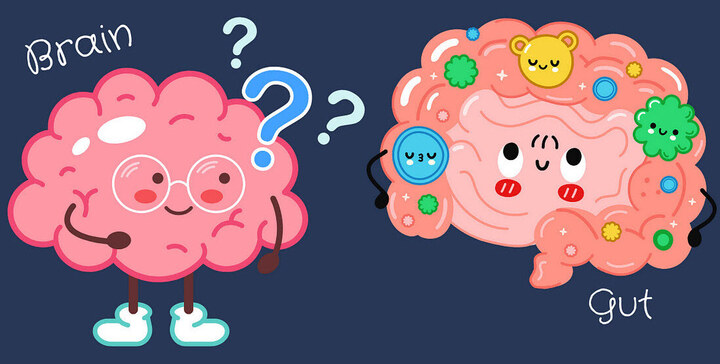
The Brain-Gut Axis is one of the most popular research fields in recent times, from health sciences to psychology. According to this thesis, there is a second control mechanism similar to the brain's control system, which until now was thought to operate alone. In other words, the brain doesn't do everything by itself. In many cases, the brain and the gut influence each other. From academic success to depression, from Parkinson's disease to autism, the gut plays a determining role as much as the brain in many different areas.
The foods we eat affect our lives both physically and mentally. Some foods can push us into depression while others can heal us. The data we already have shows, for example, that yogurt and kefir reduce depression and anxiety disorders. Therefore, the coming period will be the era of foods that heal us -- therapeutic foods.

While there used to be evidence that people with mental health problems experienced difficulties in their digestive system, today it is said that those who experience problems in their digestive system develop mental health issues. In other words, the cause-and-effect relationship -- what affects what -- has completely reversed direction with new data. Given this, the gut is no longer viewed as a passive organ as it was in the past, but as an active and determining 'second brain.'
Trauma Lasts Three Generations
Dr. Bridget Callaghan from Columbia University, in her experiments with mice, separated some mother mice from their offspring. Mice that shared a different cage from their mother behaved more problematically than other mice in terms of both brain and digestive system. But the more important finding is this: the impact that trauma left on the digestive system of traumatized mice can still be detected three full generations later. In other words, even the grandchild of a mouse that experienced trauma during the critical post-birth development period carries the traces of that trauma!
It is of course not ethically possible to conduct such an experiment on humans, but Bridget's studies on children who were abandoned by their families and placed in care facilities show that the traces of trauma are long-lasting and that their marks are both mental and digestive.