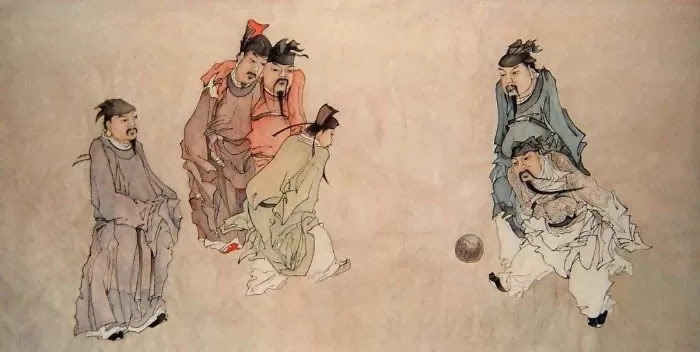
Football has become one of the most popular sports in the world today, reaching even the most remote corners of the globe. However, the origins of this sport date back approximately 2,500 years to a game called “cuju” played in China. Cuju was a game in which two teams tried to pass the ball through an opening in a central ring without using their hands or letting the ball touch the ground. In 2004, it was recognized by FIFA as the oldest known form of football.
Derived from the words “cu” (to kick) and “ju” (a leather ball stuffed with feathers), this game became popular during the Warring States Period (476–221 BC) in Chinese history. Initially, due to its demanding nature, it was used as a sport to train military cavalry.
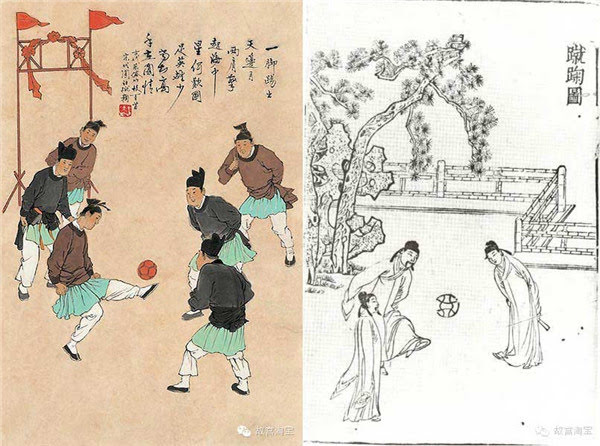
During the Han Dynasty (206 BC–220 AD), cuju spread beyond the military sphere to royal courts and the upper classes. It is said that Emperor Wu Di of Han played cuju and greatly enjoyed the sport. During this period, cuju was standardized with established rules. Special fields called "ju cheng" were built for cuju matches held in imperial courts. These fields featured crescent-shaped goalposts at each end.
Although cuju is mostly demonstrated today at small-scale tourist events or ceremonies, its colorful past continues to live on through its deep connection to the origin myths and culture of the Chinese nation.
Styles and Rules of Cuju
Cuju was quite a complex game that evolved and developed over time. It could be played individually or as a team, and could be competitive or cooperative in nature. With an aesthetic dimension as well, cuju was generally played for entertainment. Its non-competitive version was known as "baida," while competitive cuju was played between two teams, with each side aiming to score more points than the other.
There were two main styles of cuju:
- Zhuqiu: Played at special ceremonies such as the emperor's birthday or international events. Each team in this style consisted of 12 to 16 players.
- Baida: In this style, there were no goals or scoring objectives. Players kept the ball within boundaries on a field enclosed by ropes. Fouls were counted, and the player or team with the fewest fouls won.
The Cultural and Symbolic Meaning of Cuju
Cuju was not merely seen as entertainment or a military training tool, but was also regarded as a philosophy of life. The poet Li You, who lived in the late Han Dynasty, described the game of cuju as a metaphor for living a good life. This perspective reveals the deep roots and significance of cuju in Chinese culture.